

Many parenting approaches focus primarily on behaviour — how to stop challenging behaviour, encourage compliance, or teach children to “fit in.” But an attachment-based developmental approach looks much deeper than behaviour alone.
At its heart, this approach is based on a simple but powerful belief:
Children naturally move towards growth, maturity, emotional regulation, empathy, resilience, and independence when the right conditions are in place.
Rather than trying to force development through rewards, punishments, or behavioural strategies, the focus becomes creating the conditions that allow healthy development to unfold naturally.
Development Is Not Something We Force
Children are designed to grow and mature over time, just as they naturally learn to walk and talk. Many emotional and social capacities — such as self-regulation, problem-solving, patience, and empathy — also develop organically when children feel safe, supported, and connected.
When we rush development or focus only on correcting behaviour, we can unintentionally interfere with the very processes that help children mature.
From a developmental perspective, challenging behaviour is often a sign that a child is stuck, overwhelmed, or lacking the conditions they need to thrive — not that they are “bad” or intentionally difficult.
How This Differs From Traditional Parenting Models
Many traditional parenting models are rooted in socialisation — teaching children to behave appropriately, comply with expectations, and fit societal norms.
These approaches often focus on:
- Rewards and consequences
- Behaviour management
- Compliance
- Control
- Teaching skills directly
While structure and guidance absolutely matter, attachment-based developmental theory recognises that true maturity cannot simply be taught through external control.
Real growth happens from the inside out.
This approach also differs from models that focus primarily on diagnosis and disorder. Rather than asking “What is wrong with this child?”, the developmental approach asks:
“What is this child struggling with, and what conditions are missing for healthy development to unfold?”
It assumes that behaviour makes sense when we understand the child’s emotional world, nervous system, and developmental needs.
Why Attachment Matters So Much
Attachment is the emotional connection and sense of safety a child experiences with the adults caring for them.
Research and developmental theory increasingly show that children grow best when they feel deeply connected to the adults responsible for them.
When children feel emotionally safe and securely attached, they can stop focusing all their energy on seeking connection and protection. This allows the brain and nervous system to rest — and growth can begin to happen more naturally.
This is why connection is so important.
Children do not become independent by being pushed away emotionally. They become independent when they feel safe enough to let go gradually.
As Dr. Gordon Neufeld explains in Hold On to Your Kids, our role is not to control children into maturity, but to provide the secure attachment relationships that allow development to unfold.
Supporting Children Through Relationship
An attachment-based developmental approach does not mean permissive parenting or having no boundaries.
It means leading through relationship first.
It means understanding that behaviour is often communication, especially for neurodivergent children, sensitive children, or children experiencing stress and overwhelm.
When we focus on connection, emotional safety, and developmental needs, we often see:
- Reduced conflict
- Greater cooperation
- Improved emotional regulation
- More resilience
- Stronger relationships
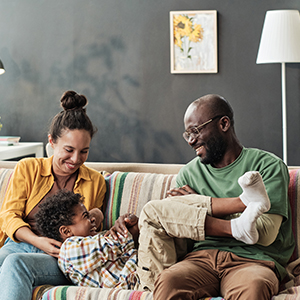 Increased wellbeing for the whole family
A Different Way of Understanding Children
For many parents, this approach can feel like a complete shift away from traditional ideas about parenting and behaviour.
But for many families, it also brings relief.
Instead of constantly battling behaviour, parents begin to understand what their child truly needs in order to grow, mature, and thrive.
If you would like to learn more about attachment-based parenting support and how I work with families, you can book a free consultation through Connected Parenting UK’s booking page.